If your local school district is planning a referendum, check out our Referendum Resources page.
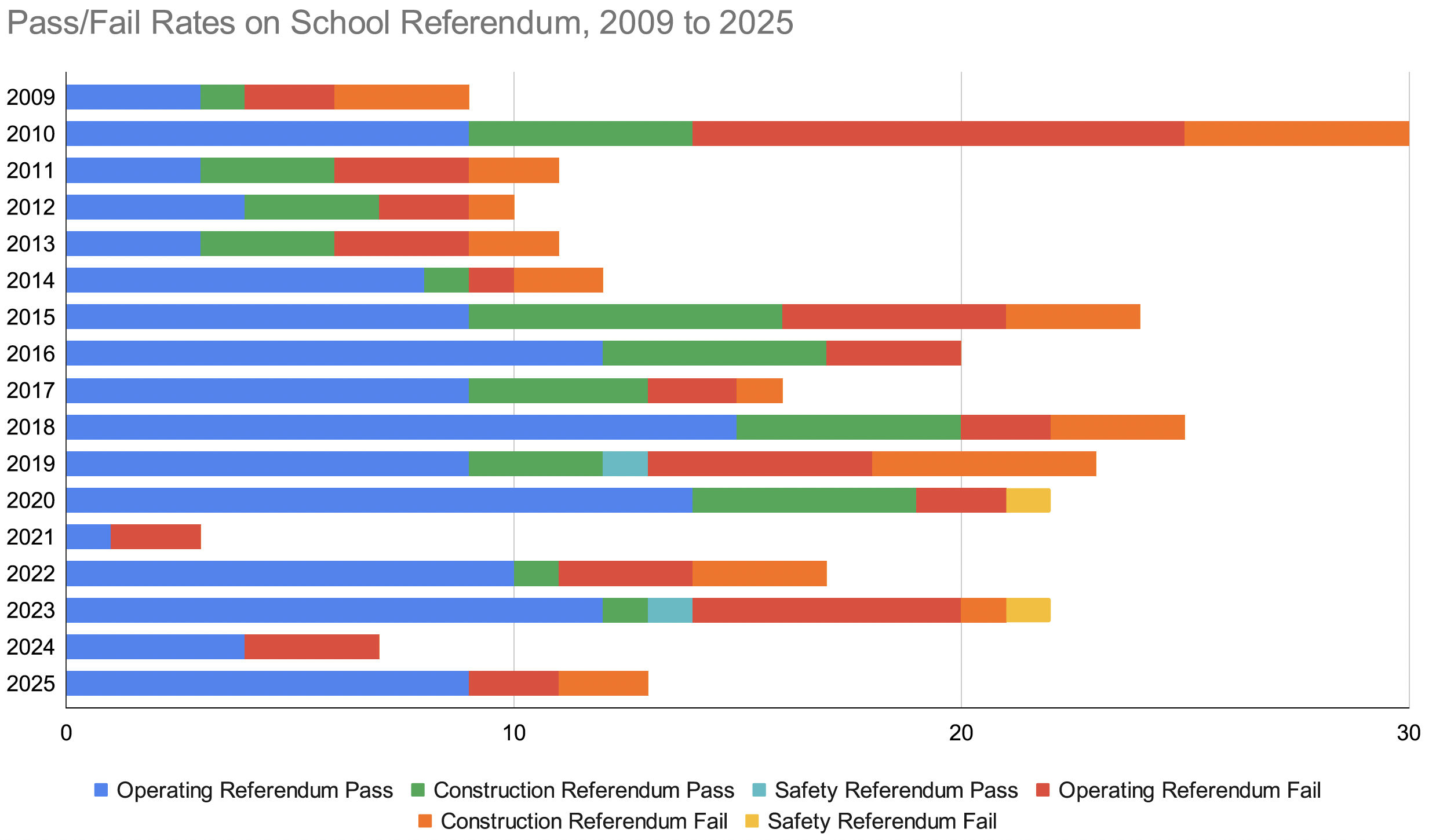
With state funding for school operating expenses not keeping up with inflation, and local funds capped and primarily used for transportation and facilities, over a third of Indiana’s nearly 300 school districts have put more than 270 education referendums on local ballots since 2009.
A school tax levy referendum is a ballot question that asks a community to increase its own taxes to provide adequate resources, hire and retain teachers and staff, or ensure safe and updated facilities. Indiana has three types of referendums: operating, safety, and construction.
Why So Many Referendums?
In 2008 a major reform replaced Indiana’s unique petition and remonstrance process with a referendum requirement for large, debt-financed construction projects. This shifted the decision to the voting booth, requiring voter approval. Also in 2008, the state capped the tax bills of property taxpayers. In 2010, these caps were added to the state constitution. When a taxpayer’s bill exceeds the cap, they receive a credit, and the local government loses that revenue. Although property taxes no longer fund the general fund, schools still receive them for transportation, capital projects, and debt service. For perspective, one study found that in 2014 alone, Indiana school districts lost over $250 million in property tax revenue due to these caps.
One thing is for sure, communities believe their local public schools should be appropriately funded.
Sharing Referendum Dollars with Charter Schools
Beginning in 2024, Indiana law required public school districts in four urban counties to share a portion of their operating referendum funds with charter schools serving students who live within the district’s boundaries. This sharing requirement will expand statewide in 2028.