Our Kids. Our Futures. Why a Yes Vote on a School Referendum Is Necessary
Thirty-eight Indiana school districts have referendums on the November 3, 2026 ballot, including 37 school operating referendums, one construction referendum, and one safety referendum. These questions ask voters to approve additional local property-tax revenue to help school districts pay for the ongoing costs of educating students. The 37 operating referendums will affect the education of over 200,000 public school students (20% of Indiana’s public school students) and additional charter schools students (some referendums will have to be divided with some charter schools). Of those 200,000, over 85,000 qualify for free and reduced lunch.
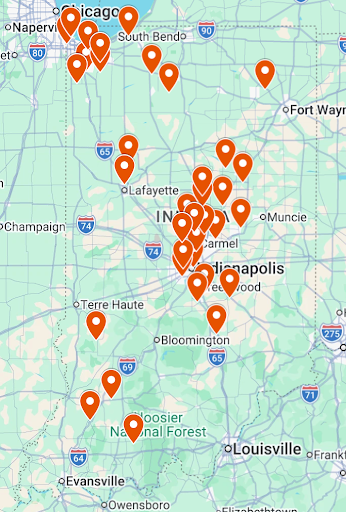
Why Do All These Schools Need Operating Referendums?
The failure of the state legislature to keep public school funding in line with inflation (and we mean inflation of all services and goods provided, like insurance), combined with the effects of SEA 1, has stretched school budgets and will continue to do so. Despite the fact that the overall K–12 population is shrinking, Indiana is educating over 37,000 more students than before vouchers, and with less money than it did in 2010. All of this increases the financial burden on local taxpayers. Approving an operating referendum is now more important than ever.
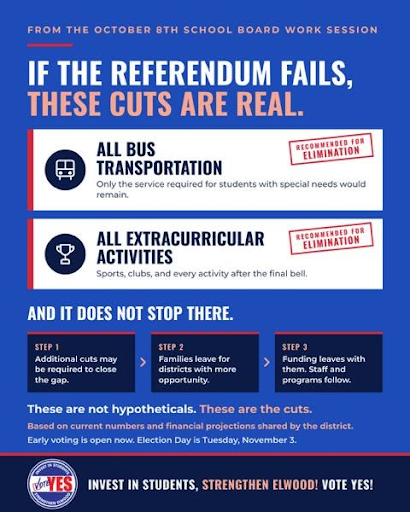
When funding falls short, students pay the price: longer bus rides (or no bus rides), bigger classes, fewer teachers and support staff, and a shrinking selection of courses and programs. Until the Indiana legislature fully funds our public schools, approving your community’s school operating referendum is essential.
Our ICPE 2026 School Funding Survey makes the situation clear. Nearly half of Indiana’s traditional public school corporations participated in the survey, and nearly all reported negative financial effects from SEA 1. This bill, which passed in 2025, significantly reformed property taxes, drastically reducing revenue for schools and other public entities. Half of survey respondents have already reduced support staff, 45.8% have eliminated teaching positions, and more than 90% are either making or considering reductions to teaching and support staff. Districts also reported reducing transportation, postponing building maintenance and cutting services to students and families. For most, there is little “fat” left to cut.
SEA1 is not the only cause of financial strife for our public schools. Last school year alone, $548 million went to subsidizing private school tuition for families through taxpayer-funded vouchers. While our public schools welcome all children who walk through their doors, these private schools, siphoning public money away, can decide which students to allow in. This is just one of many examples of the privatization of public education in Indiana. Increasingly, our public tax dollars flow to private organizations that lack both accountability and transparency. With every legislative session, the bucket of funding for public schools sprouts new leaks.
Public schools are the heart of our communities. Strong public schools make a strong community. Our economy depends on the public schools graduating kids who will go on to be talented, skilled, and knowledgeable workers. Our society depends on public schools graduating kids who will be good, caring, problem-solving neighbors. Our democracy depends on public schools educating kids who will have the knowledge and skills to participate. Our kids depend on public schools for their future. Our country as a whole depends on public schools to shape the dreamers, innovators and leaders who will ensure we continue to move forward.
Early voting has already begun. We must center public education when we head to the voting booth by voting for legislators who will support and fully fund our public schools (see legislative candidates that have pledged support and see the voting scorecard of current legislators). Vote for school board members who will be good stewards of your tax dollars and work to ensure that the promise of public education will be fulfilled for each and every child. Lastly, and so importantly, vote for your referendum on the ballot.
Vote for public education–for a strong community, a strong democracy, and a strong future for our kids.
Share this post with any friends or family members in these 37 school districts. Raise awareness in your community. Your vote is important. Vote for public education.
Additional Information
Costs to Operate Public Schools Have Grown Due to Inflation
Indiana school districts seeking operating referendums in 2026 report significant increases in essential operating costs:
- Utilities – 16% ↑ — Crown Point
- Transportation – 9.3% ↑ — Crown Point
- Employee health insurance – 10.5%–16.8% ↑ — Hamilton Southeastern
- Electricity – 19.4% ↑ since 2021 — MSD of Decatur Township
- Maintenance – 28.7% ↑ since 2021 — MSD of Decatur Township
Sources
Crown Point — September 2026 Board Meeting Recap
Hamilton Southeastern — 2026 Budget Story / Board Materials
MSD Decatur Township — 2026 Referendum FAQ
Referendum Details
(on mobile, rotate device to horizontal for easier reading)
| School corporation | County | What the referendum funds |
|---|---|---|
| Anderson Community School Corporation | Madison | Teacher/staff compensation and student safety |
| Barr-Reeve Community Schools | Daviess | Academic programs, educational programs and class sizes |
| Bartholomew Consolidated School Corporation | Bartholomew | Daily operations, staff, safety, class sizes and academic programs |
| Carmel Clay Schools | Hamilton | Class sizes, athletics, extracurriculars, music/PE, safety and mental health |
| Clark-Pleasant Community School Corporation | Johnson | Academic programs, safety, class sizes and teachers/staff |
| Crown Point Community School Corporation | Lake | Transportation, security, teacher/staff compensation |
| Culver Community School Corporation | Pulaski, Fulton, Starke & Marshall | Safety, SROs/nurses, staff, class sizes, transportation and programs |
| Elwood Community School Corporation | Madison | Safety, SROs, staff, academic/support programs |
| Franklin Community School Corporation | Johnson | ~275 staff, behavioral health, SROs, safety/security |
| Frontier School Corporation | White | Safety/security and academic programs |
| Hamilton Southeastern Schools | Hamilton | Teachers/staff, academic programs and operations |
| Indianapolis Public Schools / Indianapolis Public Education Corporation | Marion | SROs, class sizes, counselors/social workers, programs and staff |
| MSD of Decatur Township | Marion | School safety, police department, student support/programming |
| MSD of Shakamak | Clay & Greene | Staff, safety, class sizes and academic programs |
| MSD of Washington Township | Marion | Safety, staff, class sizes, transportation and programs |
| MSD of Wayne Township | Marion | Transportation, staff, safety and SROs |
| Michigan City Area Schools | LaPorte & Porter | Safety/SROs, staff, class sizes and academic/student support |
| Mississinewa Community School Corporation | Grant | Lost property-tax revenue, buses, student programs and safety |
| Noblesville Schools | Hamilton | Teachers/staff, safety, class sizes and academic programs |
| Oak Hill United School Corporation | Grant & Miami | Daily operations, academic and support programs |
| Oregon-Davis School Corporation | Starke | Staff, class sizes, transportation, technology and safety |
| Pike County School Corporation | Pike | Transportation, facilities maintenance, safety/SROs |
| Porter Township School Corporation | Porter | Teacher/staff retention, professional development and academics |
| River Forest Community School Corporation | Lake | Transportation, utilities, safety, maintenance and support |
| School City of Beech Grove | Marion | Teachers, safety, student support and academic programming |
| School City of Whiting | Lake | Teachers, safety/security and daily operations |
| Shelbyville Central Schools | Shelby | Staff, class sizes, transportation, safety and programs |
| Sheridan Community School Corporation | Hamilton & Boone | Operations, buildings, staff, safety and CTE |
| Smith-Green Community Schools | Noble & Whitley | Safety/SROs, staff, class sizes, transportation and programs |
| Southeast Dubois County School Corporation | Dubois | Staff, class sizes, academic programs and safety |
| Tipton Community School Corporation | Tipton | Safety, staff, class sizes and academic/support programs |
| Tri-Central Community Schools | Tipton | Transportation, class sizes, safety and staff |
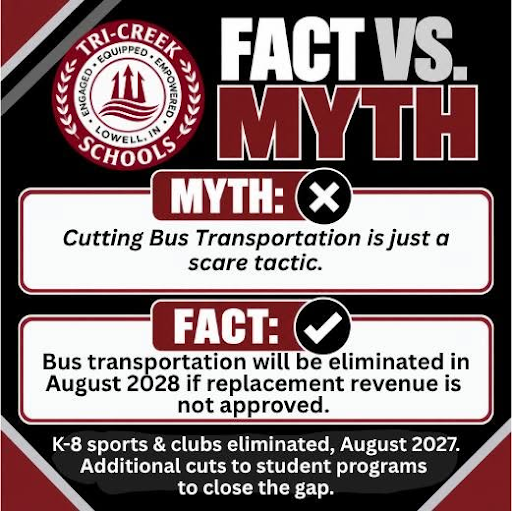
| Tri-Creek School Corporation | Lake | Current educational and operating expenses |
| Union Township School Corporation | Porter | Academic programming, operations and educational stability |
| West Lafayette School Corporation | Tippecanoe | Academic programs, class sizes, student support, transportation and safety |
| Westfield Washington Schools | Hamilton | Daily operations, staff, safety, class sizes and academics |
| Zionsville Community Schools | Boone | Staff, class sizes, safety, academics and support programs |
Note: There is also one safety (Wa-Nee Community School Corporation) and one construction referendum on the ballot (School City of Whiting). You can see the complete list on the Department of Local Government Finance.
Definitions and More
Referendum – A local ballot question asking a school district community to approve a higher, time-sensitive tax levy amount to help improve schools. There are a few types of school referendums in the state. With the exception of the Indianapolis Public Education Corporation, only traditional public schools can put referendum questions on the ballot.
Operating Referendum – Pays for resources that directly affect children’s learning, like adding funding to hire more teachers reducing class sizes or using funds to create necessary support positions like reading and math specialists. This referendum type attempts to compensate for the lack of tuition support funding coming from the state via the state budget.
Construction Referendum – Pays for specific, defined capital projects such as renovations and overall improvements to schools, updating facilities for safety and health or expansion, etc.
Safety Referendum – Pays for services such as mental health programs, school resource officers, and security enhancements.
For additional information see our forum held on May 6, 2026 on the topic.
For a deeper dive into referendum history in the state, see this long-running data dashboard by Indiana University Center for Evaluation and Education Policy.
Further information on referendums, including history, can be found on the state Department of Local Government Finance.